To install seismic straps on a vertical water heater, secure heavy-duty metal straps around the tank at the top one-third and bottom one-third of its height. These straps must be bolted directly into wall studs using 1/4-inch lag bolts to prevent the unit from tipping, sliding, or shearing gas and water lines during sudden ground movement.
A full 50-gallon water heater weighs approximately 450 pounds. Without mechanical bracing, this mass becomes a significant hazard during seismic activity, capable of snapping rigid gas lines or fracturing high-pressure water connections. Securing the tank is a critical safety upgrade that prevents both fire and water damage.
As an experienced plumber in Panorama, CA, I have observed that many existing straps are installed incorrectly, often attached to thin drywall rather than the structural wall studs. This guide details the technical requirements for a compliant, “first-time-right” installation.
Why Bracing is Mandatory for Safety Standards
In California, bracing a water heater is a legal requirement for property transfers and safety inspections. The objective is to create a rigid, immobile connection between the appliance and the building’s skeleton.
During a recent safety audit for a residential client near Plummer Street, we found that loose straps allowed the tank to shift several inches. In a tremor, this “slack” creates momentum that can shear lag bolts entirely. Proper tension is as vital as the strap material itself.
Step-by-Step Installation Guide
- Identify the Structural Anchor Points: You must locate the vertical wood studs behind the water heater. Use a stud finder to mark the center of the studs on both sides of the tank. If the water heater is positioned more than an inch or two from the wall, you must install a 2×4 “spacer” block securely to the studs first, then attach the straps to that block to eliminate gaps.
- Positioning the Top and Bottom Straps: National safety codes require two sets of straps for standard tanks. The upper strap must be in the top one-third of the tank, at least 9 inches below the top cap. The lower strap belongs in the bottom one-third of the tank, at least 4 inches above the water heater’s controls or thermostat.
- Drilling Pilot Holes and Mounting: Wrap the approved seismic strap kit around the front of the tank. Align the ends with your marked stud centers and drill pilot holes to prevent the wood from splitting. Drive 1/4-inch diameter lag bolts through the strap holes and into the studs, ensuring the bolts penetrate the wood by at least 1.5 inches to provide maximum pull-out resistance.
- Tensioning and Final Inspection: Once the bolts are seated, tighten the cinch mechanism. The tank should be flush against the wall or the spacer block with no visible movement. A plumber in Panorama emphasizes that if the tank wiggles, the straps are ineffective.
The Advanced Diagnostic & Restoration (ADR) Framework
At Bryco Plumbing, we utilize our proprietary Advanced Diagnostic & Restoration (ADR) framework to eliminate invasive guesswork and ensure long-term property protection. This three-phase lifecycle is designed to address the specific geological and structural challenges of the region.
Phase 1: In-Home Forensic Diagnosis
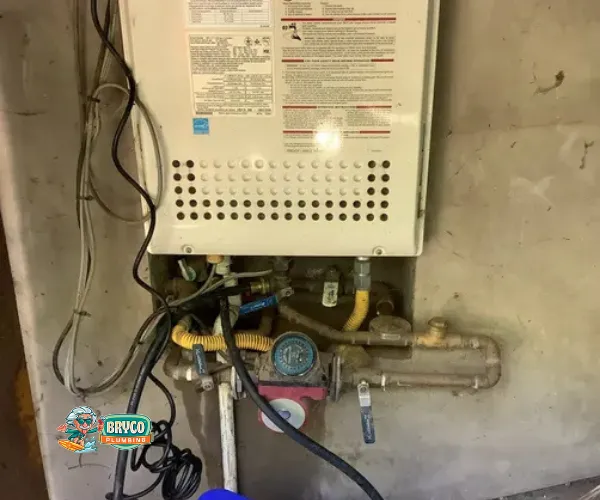
We begin with a forensic analysis of your utility space. Our team uses high-resolution video fiber optics and electronic leak detection to inspect the tank lining, gas flex lines, and the temperature and pressure (T&P) relief valve. This ensures we aren’t bolting a heavy tank to a compromised or water-damaged stud.
Phase 2: Precision Restoration
In this phase, we apply mechanical expertise to install seismic bracing with total accuracy. This includes using specialized hardware that exceeds local codes. We treat the installation as a restoration of your home’s safety envelope, focusing on “first-time-right” results that preserve property value and maintain code compliance.
Phase 3: Performance Verification
The final pillar of our Advanced Diagnostic & Restoration framework is verification. We test the strap tension, verify the clearance of the venting system, and ensure that the installation hasn’t stressed the water or gas connections. This provides a transparent, data-backed confirmation that your system is secure.
Myth: Heavy Tanks Are Inherently Stable
A common industry misconception is that a full water heater is “too heavy” to move. In reality, the greater the mass, the more kinetic energy the tank possesses once it starts to shift. Gravity is insufficient to hold a vertical cylinder in Panorama, CA plumber, during lateral ground movement.
While performing inspections in the Chase Street neighborhood, our team often finds that homeowners underestimate this risk. Gravity alone cannot counter the forces of a significant tremor; professional bracing is the only reliable countermeasure.
Professional Verification and Compliance
While DIY kits exist, the nuances of different wall types, such as stucco over brick or wood frame, often require professional tools to ensure a deep anchor. A Panorama plumber from our team ensures that the straps are legally compliant and mechanically sound.
Our 30 years of experience have taught us that a single misplaced bolt can compromise the entire safety system. We focus on the fine details to ensure your home remains functional and safe.
People Also Ask (FAQ)
Do I need two or three straps for my water heater? Standard tanks up to 52 gallons require two straps. Larger units or extra-tall models may require a third strap in the middle to prevent buckling.
Can I use any metal tape for seismic bracing? No. You must use California-approved seismic strapping kits. Standard plumber’s tape is too thin and may stretch or tear under the weight of a shifting tank.
Should I replace my gas line when adding straps? Yes. Installing a stainless steel flexible gas connector is recommended. This allows the tank to move slightly without snapping the gas connection, preventing potential fires.
How often should I check my seismic straps? Inspect the tension once a year. If a significant seismic event occurs, check them immediately to ensure the bolts haven’t pulled away from the wall studs.
Secure Your Home with Confidence
Bryco Plumbing is your dependable partner for professional and trustworthy service. We prioritize early detection and accurate diagnosis to prevent extensive damage and costly repairs. With over 30 years of experience, we utilize advanced technologies to ensure your plumbing systems, including seismic safety, are handled with precision.
If you want the peace of mind that comes from our Advanced Diagnostic & Restoration audit, our team is ready to help. We provide transparent, upfront pricing and customized solutions to keep your property functional and safe.Secure your home today. Contact Bryco Plumbing to schedule a professional safety consultation.