
July Heat & Your Home's Plumbing: San Fernando Valley's Summer Slab-Leak Season
By Bryco Plumbing • July 31, 2026 • Serving Woodland Hills, CA, Los Angeles, CA, San Fernando Valley, CA
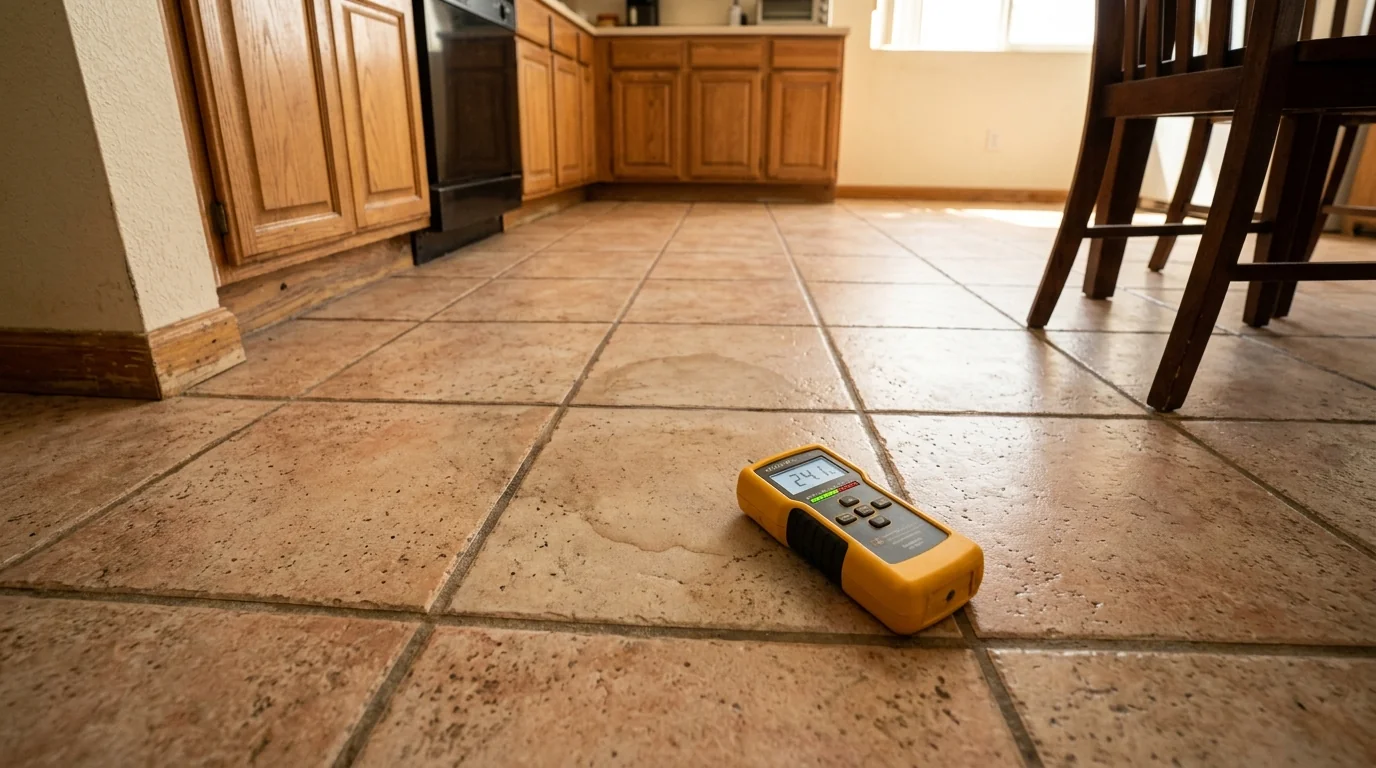
Slab leaks — pinhole leaks in the copper lines running beneath a concrete foundation — are famously hard to notice until they’re a real problem. What most homeowners don’t know is that in the Woodland Hills, CA area, they follow a strong seasonal pattern. Late July is peak slab-leak season.
This guide covers why that is, what warning signs a homeowner in Woodland Hills, Sherman Oaks, or the wider San Fernando Valley should be watching for right now, and what to do the moment a slab leak is confirmed.
In this article
- Why late July is peak slab-leak season
- The warning signs most homeowners miss
- Confirming a slab leak without breaking the floor
- Repair options once a leak is confirmed
- When a whole-house repipe is the smart move
- What to do in the first 24 hours
- Bottom line for Woodland Hills, CA homeowners
Why late July is peak slab-leak season
Three factors converge in the last two weeks of July to push a marginal copper line over the edge.
Peak hot-water demand
Even in a Southern California summer, hot water use spikes late July — laundry loads, longer showers because the house is uncomfortable, more dishwasher cycles. Every draw sends hot water through the same aging line.
The hotter the water, the more aggressive the erosion inside the pipe wall.
Soil movement
SFV soil dries out through July. Dry soil shifts, contracts, and puts real mechanical stress on the pipes running through it. That stress alone doesn’t cause a leak, but it accelerates one that was already starting.
The warning signs most homeowners miss
A slab leak rarely announces itself. But it does drop hints — you just have to know what to notice.
The water meter test
Turn off every water fixture in the house. Walk out to the meter. If the low-flow indicator — a small dial or triangle — is still spinning, you have a leak somewhere. Not necessarily under the slab, but somewhere.
Do this test tonight. It takes five minutes and it’s how most confirmed slab leaks in Woodland Hills are first detected.
A warm spot on the tile
If the hot line is the one leaking, part of the floor over the leak will be measurably warmer than the surrounding floor. On a bare foot in the morning, a foot-wide warm patch on a tile floor is a red flag until proven otherwise.
The other classic sign — sound of running water when nothing is on — is real but easier to miss in a normal household soundscape.
Confirming a slab leak without breaking the floor
Diagnosis in 2026 does not require jackhammers.
Acoustic detection
A specialized microphone placed at various points on the floor can hear the pressurized leak within a foot or two of accuracy. It’s a mature technique.
Combined with pressure testing on the hot and cold lines, we can usually confirm which line, which room, and roughly where — all before touching concrete.
Thermal imaging
For hot-water leaks specifically, an infrared camera renders the leak trail as a bright warm band on the floor. It’s essentially a visual confirmation of the acoustic reading.
The two techniques used together get us to a single small opening in the slab, not a demolition project.
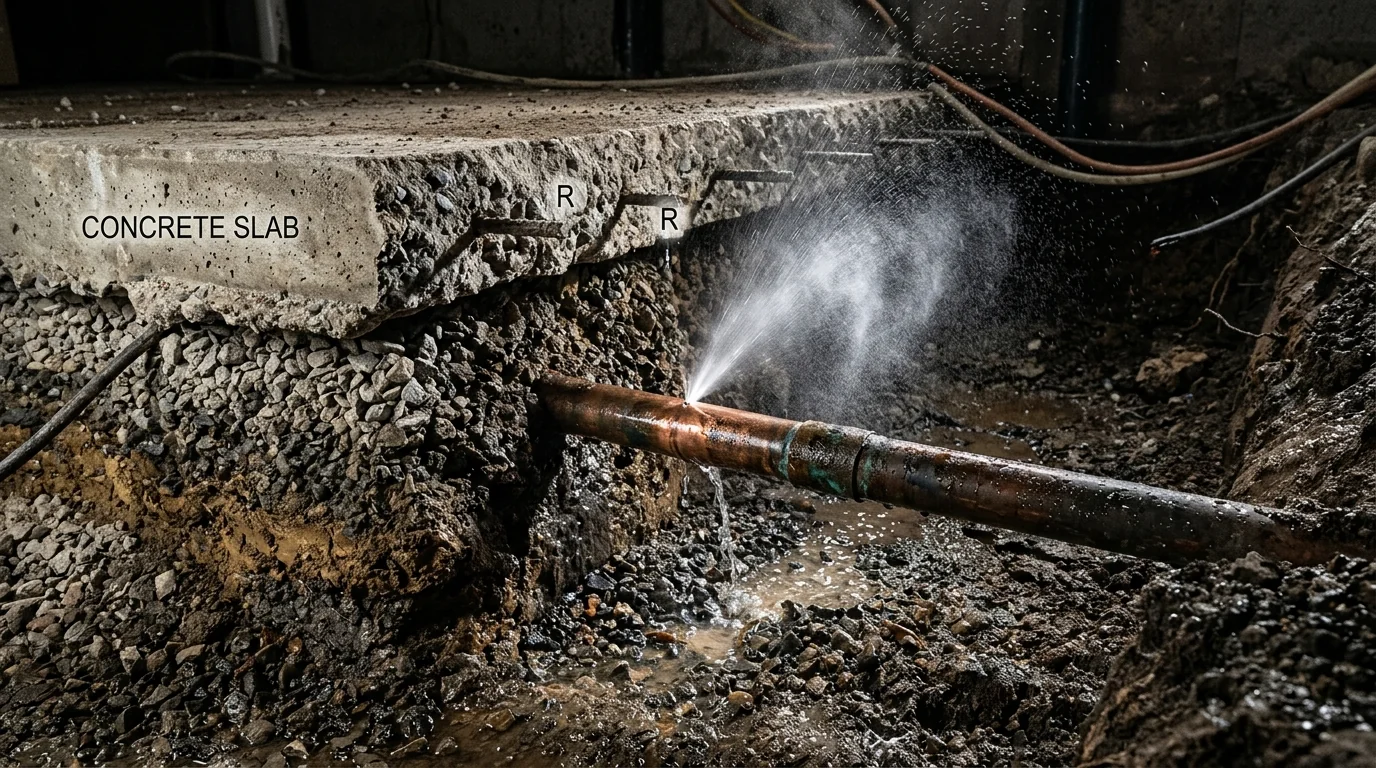
Repair options once a leak is confirmed
There are three legitimate approaches and one situational recommendation.
Direct spot repair
Cut a small section of slab, expose the leaking pipe, repair the joint, and patch. Fastest and cheapest option when the leak is isolated and accessible.
Best for a home where the original copper is generally in good shape and this is a one-off.
Rerouting overhead
Abandon the failed line in the slab and run a new line through the attic or wall cavities. No further slab work required, and the new line is accessible for the life of the home.
Excellent option for a home with an aging copper system where more slab leaks are statistically likely.
| Situation | Recommended Approach | Typical Timeline |
|---|---|---|
| First leak, isolated | Spot repair | 1 day |
| Repeat leaks (2+) | Overhead reroute | 1–2 days |
| Aging copper system | PEX repipe | 3–5 days |
| Emergency (major water) | Shut main + emergency dispatch | Same day |
When a whole-house repipe is the smart move
If you’re on your second or third slab leak in the same home, this is the conversation to have.
The statistics
Copper systems that have leaked once are dramatically more likely to leak again in the next 24 months. The chemistry that caused the first leak is doing the same thing to every other joint in the system.
This is not a scare tactic — it’s a service-history pattern we see over and over across the San Fernando Valley.
PEX repipes in 2026
A modern PEX repipe of a typical SFV home runs 3–5 days and comes with 25-year manufacturer warranties on the material. Compared to a lifetime of one-off slab repairs, it’s a legitimate ‘be done with it’ option.
For a home planning to stay put for 5+ years, the math is often clearly in favor of the repipe.
What to do in the first 24 hours
For a homeowner in Woodland Hills, Encino, Sherman Oaks, Van Nuys — or anywhere in the San Fernando Valley — here’s the order of operations.
- Turn the water main off. The single most important step is stopping the flow. If you can't find your main shutoff, the meter shutoff at the street works — you may need a curb key. This alone can be the difference between a $2,000 repair and a $15,000 restoration.
- Call for detection, not demolition. Any contractor whose first proposal is to jackhammer looking for the leak is the wrong first call. Acoustic detection and pressure testing come first.
- Book same-day service. For 24/7 slab-leak service across Woodland Hills, Los Angeles, and the San Fernando Valley, call (833) 765-2245 — someone answers, no matter the hour.
Suspect a Slab Leak? Don't Wait.
Same-day slab-leak detection across Woodland Hills, Tarzana, West Hills, Calabasas, Encino, Canoga Park & the greater San Fernando Valley. 24/7 emergency response.
Bottom line for Woodland Hills, CA homeowners
The specifics matter, but the pattern is simple: the difference between an inexpensive outcome and an expensive one is usually the timing of your first phone call. In the SFV, that decision window is often measured in days, not weeks.
If you noticed any of the warning signs in this guide, treat it as a same-week action item, not a same-month one. The cost of scheduling a diagnostic visit is small compared to the cost of skipping it.
When you speak with a technician about slab leaks in Woodland Hills, ask specifically what they’ve seen in your immediate area over the last twelve months. That question separates local expertise from generic advice.
Frequently Asked Questions
How much water does a slab leak actually waste?
A pinhole leak can waste 1,000+ gallons per day. On a hot-water line that’s also lost energy. It’s usually the water bill that finally tips homeowners off.
Is slab-leak detection covered by homeowner's insurance?
Detection often is; the repair of the pipe itself typically is not; damage caused by the leak usually is. Always call your insurer before authorizing large work.
How long does the detection process take?
For most homes across Woodland Hills, Sherman Oaks, and the SFV, a professional acoustic-plus-thermal detection is a 60–90 minute visit.
Should I keep repairing individual leaks or repipe?
At two confirmed leaks in the same home within 24 months, a whole-house repipe usually wins on both cost and headache.
Do you offer emergency slab-leak service?
Yes — 24/7 across Woodland Hills, Los Angeles, and the San Fernando Valley. Call (833) 765-2245 at any hour.