
5 Warning Signs of a Slab Leak in Your Woodland Hills Home (And What to Do Next in 2026)
What is a slab leak — and why Woodland Hills sees so many
A slab leak is a leak in one of the pressurized water lines that runs beneath the concrete foundation (the “slab”) of your home. Because the leak is trapped under several inches of concrete, water can seep for weeks or months before it becomes visible upstairs.
Woodland Hills has an unusually high concentration of slab leaks for three reasons:
- Aging copper lines. Most homes in ZIP codes 91364 and 91367 were built between 1955 and 1978 with Type-M copper supply lines. That material has a service life of 40–60 years — and we’re now well past that window.
- Hard water. LADWP water averages 10–15 grains per gallon of hardness, which slowly eats copper from the inside out (see the USGS hardness scale).
- Mild seismic movement. Even minor Southern California soil shifts create tiny stress fractures in copper elbows and tees under the slab.
Combined, these three factors put Woodland Hills, Tarzana, and West Hills homes in a “perfect storm” window for slab leaks between 2020 and 2035.
The math homeowners miss:
The math homeowners miss: A pinhole slab leak losing just one drop per second wastes ~2,700 gallons per year — a full-flow leak wastes over 100,000 gallons per year. Every day of delay compounds both the water bill and the framing/mold damage.
The 5 unmistakable warning signs of a slab leak
1 Warm or damp spots on the floor
This is the #1 tell. Because most slab leaks happen on the hot water line (copper corrodes faster on the hot side), the escaping water heats a specific section of your slab. You’ll walk barefoot across the kitchen or hallway and feel a warm patch where there shouldn’t be one.
2 Your LADWP bill jumped without a reason
A slab leak steals water 24/7. If your last bill is $60–$300 higher than the same month last year and nothing changed (no new landscaping, no houseguests, no leaks you know of), a slab leak is one of the top three suspects — alongside a running toilet and an underground irrigation break.
3 The sound of running water when nothing is on
Stand in the hallway or garage in the middle of the night with everything off. If you hear a faint hissing, trickling, or rushing sound — that’s pressurized water escaping through a pinhole underneath you. It’s one of the most reliable signals we hear from customers on the phone.
4 Sudden or unexplained drop in water pressure
A slab leak diverts water away from your fixtures, causing house-wide pressure to sag. If your shower feels weaker than usual and none of the DIY fixes (cleaning aerators, checking the PRV) helped, a slab leak may be the reason.
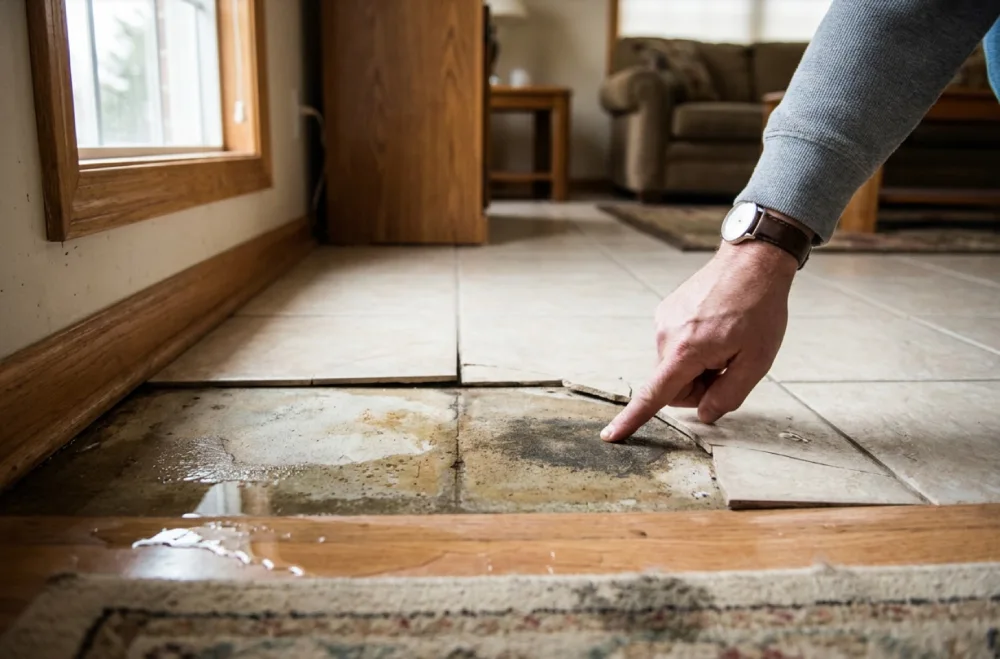
5 Mildew smell, buckled floors, or hairline cracks in tile
By the time you smell mildew or notice buckling hardwood, tile that suddenly cracks in a straight line, or peeling baseboards, the slab leak has been active for months. This is the “last-chance” sign — act immediately.
How to confirm a slab leak in 15 minutes (free)
Before you spend anything on a professional inspection, run this quick test. It works on any home with an accessible curb meter.
- Turn off every fixture in the house. Close all faucets. Turn off the icemaker, dishwasher, washing machine, and irrigation timer. Do not flush toilets during the test.
- Photograph the water meter dial. Locate the meter at the curb (usually near the sidewalk in a rectangular concrete box). Find the small triangle, star, or flow indicator and photograph its exact position.
- Wait 15 minutes. Do not use any water anywhere in the house.
- Photograph the meter again. If the flow indicator moved at all — even slightly — you have a leak somewhere in your water system. Combined with any of the 5 warning signs above, it’s almost certainly a slab leak.
Pro tip:
Pro tip: Send both photos to Bryco when you call. Our dispatcher can pre-diagnose the severity and route the right technician (residential leak-detection specialist vs. slab-repair crew) on the first visit.
What to do in the next 24 hours
Your slab-leak action timeline
Slab leak repair cost table (Woodland Hills, 2026)
Ballpark ranges based on typical Woodland Hills / West Valley pricing. Bryco provides free written estimates before any work begins.
| Service | Typical Cost | Time on Site |
|---|---|---|
| Electronic leak detection | $275 – $450 | 1–2 hours |
| Spot slab leak repair (open & patch) | $1,200 – $3,500 | 4–8 hours |
| Pipe rerouting (avoids slab demolition) | $2,500 – $5,500 | 1–2 days |
| Whole-home repiping (PEX, ~1,800 sq ft) | $6,000 – $15,000 | 2–5 days |
| Water damage restoration | $1,500 – $8,000 | 3–10 days |
Which repair method?
Which repair method? Under 20-year-old copper → usually a spot repair. Over 40-year-old copper → nearly always full repiping (fixing one leak on an aging system just means another leak within 12–24 months). Bryco’s technicians will tell you honestly which category you fall into.
Insurance & documentation tips (California homeowners)
Most California homeowners insurance policies cover the damage caused by a slab leak (drywall, flooring, cabinetry, personal property) but not the pipe repair itself or the cost to open and close the slab. That said, coverage varies dramatically between carriers — here’s how to protect your claim:
- Notify your carrier within 72 hours. Most policies contain a “prompt notice” clause. Waiting past 72 hours is one of the top three reasons claims get denied.
- Photograph everything before, during, and after. Damp floor spots, mildew, damaged flooring, the meter test photos, the plumber’s written diagnosis — all of it.
- Ask for insurance-ready invoicing. Bryco Plumbing provides itemized invoices that separate leak detection, repair, and restoration line items — exactly what adjusters look for.
- Save every receipt. Temporary lodging, laundromat visits, replacement flooring — many policies reimburse these as “additional living expenses.”
- Read your dec page. Ask specifically about “hidden water damage,” “sudden and accidental discharge,” and “service line” endorsements.
Suspect a Slab Leak? Don’t Wait.
Same-day electronic leak detection in Woodland Hills, Tarzana, West Hills, Calabasas, Encino, Canoga Park & the greater San Fernando Valley. Family-owned since 1995. 4.9★ on 599+ Google reviews.
Frequently Asked Questions
What is a slab leak?
A slab leak is a leak in one of the copper or PEX water lines that runs beneath the concrete foundation (slab) of your home. Because the leak is hidden under several inches of concrete, water can seep for weeks or months before you notice it — quietly damaging flooring, framing, and the foundation itself.
How much does slab leak repair cost in Woodland Hills, CA?
Professional slab leak detection typically runs $275–$450, and repair costs depend on the method: a spot repair through the slab runs $1,200–$3,500, pipe rerouting starts around $2,500, and full repiping (recommended for homes over 40 years old) ranges $6,000–$15,000 depending on square footage. Bryco offers free written estimates and GoodLeap financing.
How do you detect a slab leak without breaking the concrete?
Licensed plumbers use non-invasive electronic leak detection tools — acoustic listening discs, thermal imaging cameras, and pressurized gas tracing — to pinpoint slab leaks within a 12-inch radius before any concrete is cut. This precision keeps repair costs 60–80% lower than exploratory demolition.
Does homeowners insurance cover slab leaks in California?
Most California homeowners policies cover the water damage caused by a slab leak (drywall, flooring, cabinetry), but not the actual pipe repair or the cost to open and close the slab. Coverage varies by carrier — always take photos, log start dates, and file a claim within 72 hours. Bryco Plumbing provides insurance-ready documentation on every slab-leak job.
How long can a slab leak go undetected?
Small pinhole slab leaks can go undetected for six months to two years. During that time they typically waste 8,000–20,000 gallons of water and cause thousands of dollars in mold, framing, and flooring damage. That’s why we recommend a professional inspection the moment you notice a warm floor spot or an unexplained bill spike.